What to do with what I’ve found

We recently had a long holiday in wonderful Northumbria.  Such a beautiful County – the least populated in England – we met many friendly locals and were blown away (almost literally in a gale that took my husband’s prescription specs into the North Sea!) by the stunning beaches … and by the almost total lack of tourist litter on them.  One day we came across a party of schoolchildren who regularly beachcomb for rubbish – a marvellous initiative.

I did go to two locations (given to me by friends on a Beachcombing Facebook page) where I found some of my sort of treasure.  One of these was Seaham in County Durham – a shrine to sea glass collections from all over the world.  Glass is not “my thing” however – my tastes are altogether less pretty ….

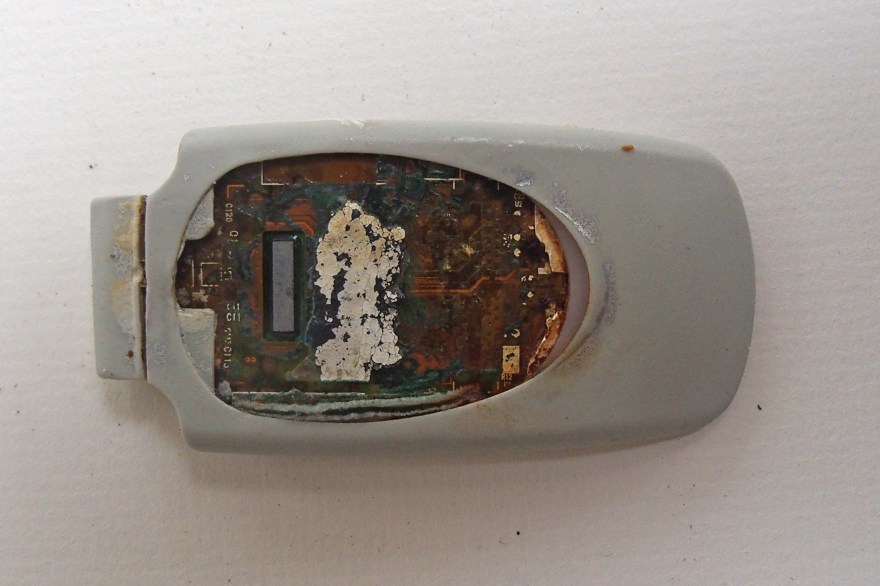
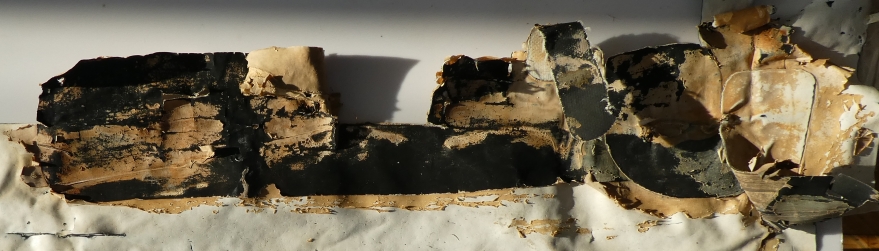
Having now washed and catalogued my finds, the more difficult task is to decide what happens to them next.  As you will see above, one item suggested a face straight away but, as I do not usually work in a representational way, I shall have to see what else comes to mind!

Feeling Bookish

I was recently looking at my various finds and decided that a piece of old number plate reminded me of a book cover.  I rubbed it down and set about making a paper book to go inside.


The bound book had covers made from prints and I added a fishing line and weight in colours to match.  However, I was not happy with this – I felt the interior needed to be made from found objects to match the cover.  I had a rummage and found some suitable fibreglass pieces.

My next book project will be to make a mini book using part of this found mobile phone part as the cover ….

OLYMPUS DIGITAL CAMERA

Is it a painting of an object or a “painting”

I recently attended the last of three “Alumni” days at West Dean College.  There were 13 students all working on their own projects and two tutors were on hand to guide and support us in our work.  My passion is for found objects but I struggle with how to move them on in an artistic way when I consider them to be beautiful in their own right.

A year or so ago, I found a strip of seaworn rubber on the beach:

Seatown - rubber 1 Continue reading “Is it a painting of an object or a “painting””

Candida Stevens Gallery, Chichester

In a word – GO!!  The Candida Stevens Gallery is at 12 Northgate, Chichester, West Sussex PO19 1BA (near the roundabout with the fire station) and is open Wednesday – Saturday 10 – 5pm and by appointment until 7th July.  The current exhibition is “Geology of Landscape” showing a range of paintings and Intaglio monoprints by the wonderful Jeremy Gardiner.

You can read more about him on his website but here is an introduction from it: “Jeremy Gardiner’s artistic excavation of the geology of landscape is shaped both by human activity and by the forces of nature. Gardiner interprets, through his painting and printmaking, a variety of landscapes that contain the marks and secrets of their own distant formation, giving them a unique, contemporary depth and beauty. His artistic exploration has taken him from the Jurassic Coast of Dorset to the rugged coast of Cornwall, the Oceanic islands of Brazil, the arid beauty of the island of Milos in Greece and more recently the Lake District and its numerous waterfalls.

Gardiner’s spatially probing and texturally explicit pictures creatively transform the lessons learnt from pioneering modern British landscape painters such as John Tunnard, Ben Nicholson, Peter Lanyon and the American artist Richard Diebenkorn.

Jeremy Gardiner is a graduate of Newcastle University and the Royal College of Art. He exhibits regularly with Paisnel Gallery in St James’s, London. His paintings have been exhibited in Europe, the USA, South America, Japan, Australia and China. He has won numerous awards throughout his career including a Churchill Fellowship, a New York Foundation for the Arts Fellowship and a Harkness Fellowship. Gardiner’s paintings are represented in public and corporate collections including the Victoria and Albert Museum, the Government Art Collection, BNP Paribas, Vincent Masons and Ente Nazionale Idrocarburi.”

I have his book “Unfolding Landscape” and “Pillars of Light” should arrive today.  But, the books cannot do justice to his work – you really do need to see the paintings in real life to appreciate the depth and texture in his work.  Here is one of my favourites –

Golden Cap, Dorset by Jeremy Gardiner

“Golden Cap, Dorset, 2007” – acrylic and jesmonite on birch panel.

Those who know me will understand my love of textured paintings and Jeremy’s use of layers built up out of  acrylic and wood relief or acrylic and/or watercolour and Jesmonite on wood panel in sculptural waves and ridges is very exciting.  He often works on wooden panels which are not driftwood but feel as if they might be and if you watch the videos on his website you can see how a blowtorch and a chisel help him create the lovely surfaces.   Recognisable features of the coast are part of a complex unification of shapes and textures and sometimes there are lovely details of buildings amongst the curves and sweeps of landscape.  Here are a couple more examples:

“Against the Light, Trevose Head, Cornwall, 2016” Acrylic and Jesmonite on poplar panel
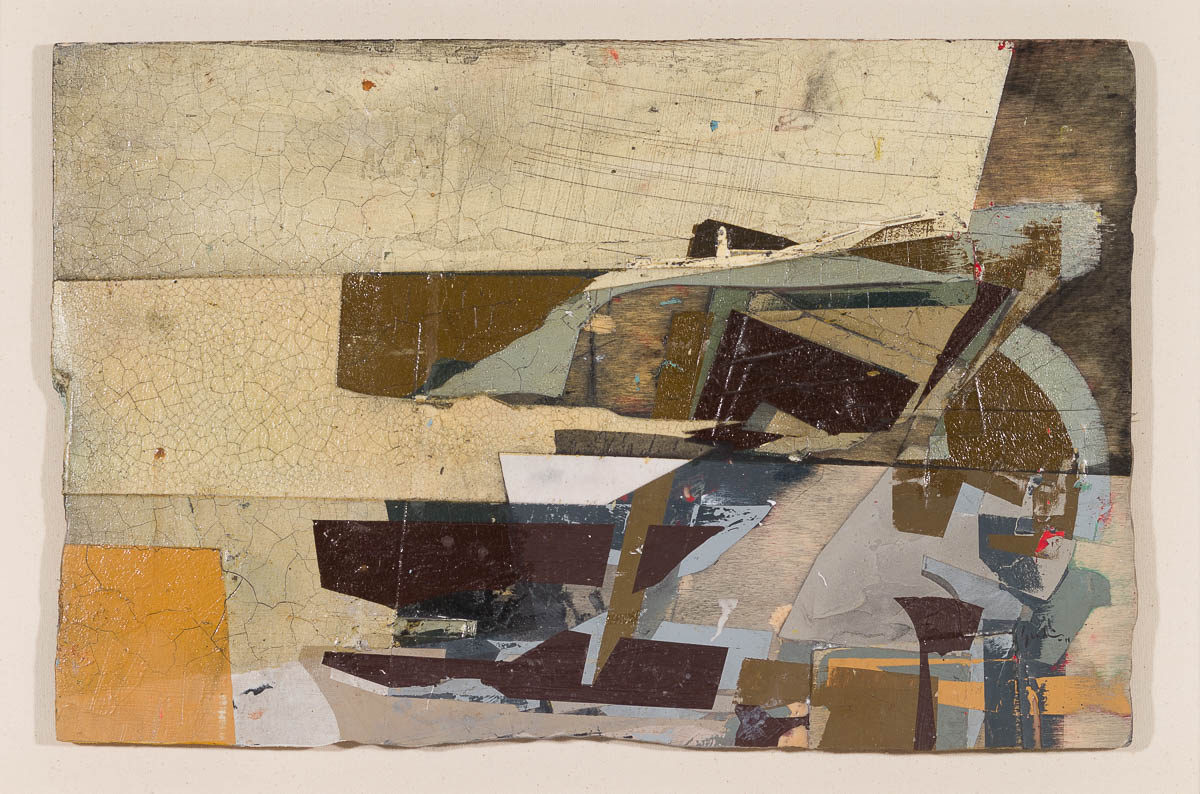
Image result for jeremy gardiner pendeen sheer cliffs

“Sheer Cliffs, Pendeen Lighthouse, 2011” – acrylic and jesmonite on poplar panel

I understand that Jeremy’s next project will be Sussex so I look forward to seeing his new work in due course – please go and be inspired – prices from £1,750.

All images produced with the kind permission of Jeremy Gardiner.

Playing with Scale

I have recently attended a couple of Alumi days at West Dean College.  They have been excellent – two tutors Kate Boucher and Mark Anstee have guided, assisted and otherwise inspire a group of us whilst we work on our own projects.  The day starts with a statement of intention and closes with a look at how each of us have got on achieving those objectives – a great opportunity to work with a group of like minded people all working on different projects in different ways.  I hope that we have many more opportunities to do this at West Dean.

I have already posted about the first of these days.  On the second day, I wanted to explore gesso so started by preparing a host of postcards by adding gesso.  This was either left to dry or was scratched and scraped into first.  Once day, I added ink and wax and scraped and scratched some more.  Here is an example of the outcome:

OLYMPUS DIGITAL CAMERAAt the end of the day, I was set two challenges – firstly, to try (for the first time) working with oil paint and the other was to think about working both very small and very large.

I decided to start with very small and an idea was borne!  Next year my husband and I will exhibit at the Oxmarket Gallery in Chichester.  As he is a photographer, I decided to set about creating a body of work responding to his photography by working in my own way using mixed media but utilising photographic equipment.  To date, I have acquired two ancient cameras (the box brownie brings back childhood memories!), a hundred plastic slides, several hundred slide holders and some lovely vintage spools.  Paper slide cases are on order and I shall have fun deciding how best to work with all of these.  Whilst the objects are not found, I like the ethos of re-using vintage items in a new way.  Here is a taster of what I have in mind:

I am creating a quantity of similar pieces to display in groups.

The next challenge – oils.  I have just three tubes of oil paint and some cold wax medium. Should be fun!

I plan to experiment with working big at College in July.